
Driveway Repair in Invercargill What Homeowners Should Know Before Starting
A driveway takes a fair bit of punishment. Vehicles come and go every day, while Southland rain, wind, cold temperatures, and changing ground conditions can all take their toll.
Over time, you might start noticing potholes, cracks, sinking areas, loose gravel, or water pooling where it shouldn't. Leaving these problems too long can make a relatively straightforward driveway repair into a much bigger job.
I’m Allan, owner and operator of Digger Worx Invercargill. If you're a homeowner in Invercargill or around Southland and your driveway is starting to show its age, here are a few things worth knowing before you get started.
Why Driveway Repair Matters
Not every driveway problem needs a complete rebuild. In many cases, catching the damage early can save you a fair bit of hassle and expense.
Keep an eye out for:
Potholes or areas where the surface has broken away
Cracks that are getting wider or longer
Sections of the driveway that are sinking
Loose or uneven gravel
Wheel ruts and soft spots
Water pooling after rain
Edges that are starting to break away
Difficulty getting vehicles safely in and out
If you notice these issues, it's worth having a proper look at what's happening underneath the surface as well.
A driveway can sometimes look like it only needs a quick patch, when the real problem is poor drainage or a failed base underneath.

Why Driveway Problems Happen in Invercargill
Southland weather can be hard on driveways. Regular rain can work its way into weak areas, while soft ground and poor drainage can cause sections of a driveway to move or settle.
Heavy vehicles can also put extra pressure on a driveway that doesn't have a strong enough base.
That's why a good driveway repair isn't always about fixing what you can see. The underlying ground and drainage need to be considered as well.
If the base has failed, simply adding more material over the top might only provide a short-term fix.
Different Driveways Need Different Repairs
There isn't one repair method that suits every driveway. The right approach depends on what the driveway is made from, how badly it has deteriorated, and what's happening underneath.
Gravel Driveways
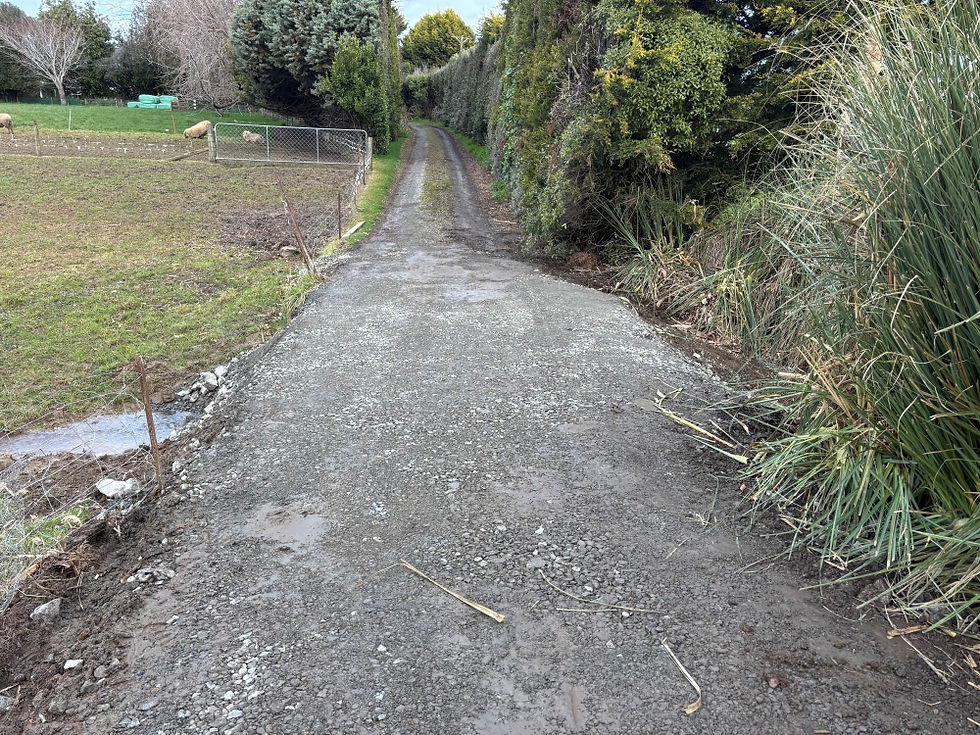
Gravel driveways are practical and popular around Invercargill and Southland. They can usually be maintained by grading the surface, filling potholes, adding fresh aggregate, and correcting drainage issues.
If the underlying base has become soft or uneven, however, more extensive excavation and base preparation may be needed.
Concrete Driveways
Concrete can develop cracks, damaged edges, or uneven sections over time. Small surface issues may sometimes be repaired, but larger cracks or significant movement can indicate a problem underneath the concrete.
In these situations, simply patching the surface may not solve the underlying issue.
Asphalt Driveways
Asphalt can develop cracks, potholes, and worn sections as it ages. Repairs may involve patching damaged areas or, where the deterioration is more widespread, resurfacing or replacing sections.
The important thing is to identify why the damage has occurred before deciding on the repair method.
Preparing for Driveway Repair
Before starting any repair work, preparation is key. Here are some steps to consider:
Assess the damage: Walk around your driveway and note all problem areas.
Check local rules: Some repairs may need council approval, especially if they affect drainage or public footpaths.
Plan your budget: Get quotes from trusted providers to understand costs.
Clear the area: Remove vehicles, debris, and obstacles to allow easy access.
Good preparation helps the repair go smoothly and reduces delays.
Don't Overlook Drainage
One of the biggest things I look at when dealing with driveway problems is water.
Water needs somewhere to go. If it sits on the driveway or gets underneath the base, it can weaken the ground and contribute to further movement and damage.
Before carrying out driveway repairs, check whether:
Water is pooling in damaged areas
The driveway has enough fall for water to run away
Downpipes are directing water onto the driveway
Drainage channels are blocked
The surrounding ground is directing water towards the driveway
Sometimes fixing the drainage is just as important as repairing the driveway itself.
Preparing the Driveway for Repair
Proper preparation is what makes a driveway repair last.
Depending on the condition of the driveway, preparation might include removing damaged material, excavating soft ground, reshaping the area, adding new aggregate, levelling, and compacting the base.
At Digger Worx Invercargill, we use our earthmoving equipment to tackle the groundwork properly rather than simply covering up the problem.
This is particularly useful when a driveway has developed deep ruts, soft sections, drainage problems, or significant settlement.
A strong, well-prepared base gives the finished driveway a much better chance of standing up to everyday use and Southland conditions.
When Is Driveway Repair Enough?
This is one of the first questions homeowners usually ask.
If the damage is limited to a small section and the underlying base is still sound, a repair may be all that's needed.
If large sections are sinking, the base has deteriorated, or water is getting underneath the driveway, more extensive work may be the better option.
In some cases, repairing and rebuilding sections can be more practical than replacing the entire driveway. It really comes down to the condition of the site.
That's why getting the area assessed before deciding what work is needed is worthwhile.
Can Driveway Repair and Ground Preparation Be Done Together?
Yes. This can make things much easier for homeowners.
At Digger Worx Invercargill, we can handle the earthmoving and ground preparation involved in driveway projects. That can include clearing damaged areas, excavation, levelling, drainage preparation, aggregate placement, and compaction.
Having the groundwork handled as part of the same project means you don't have to organise separate contractors for every stage.
We can look at the site as a whole and work out what needs to be done to create a practical and stable driveway.
Common Driveway Repair Mistakes to Avoid
There are a few shortcuts that can cause problems down the track.
Covering Up a Failed Base
Adding new gravel or material over a soft base might improve the appearance temporarily, but the problem underneath is still there.
Ignoring Water
If water is causing the damage, repairing the surface without addressing the drainage can mean the same problem comes back.
Skipping Compaction
Loose aggregate won't provide the same stability as a properly compacted base. This is especially important where vehicles regularly use the driveway.
Waiting Until the Damage Gets Worse
A small pothole or soft spot can become a much bigger problem if water continues getting into the area.
Looking After Your Driveway After Repair
Once your driveway has been repaired, a bit of regular maintenance can help keep it in good nick.
For gravel driveways, keep an eye out for potholes, loose areas, and developing ruts. Rake and top up gravel when needed and make sure drainage remains clear.
For concrete or asphalt, deal with cracks and damaged areas early before water gets further underneath the surface.
It's also worth checking your driveway after periods of heavy rain. If you notice new pooling, soft spots, or movement, it's better to investigate early.
Get Your Invercargill Driveway Back in Shape
A damaged driveway doesn't always mean you need to start again from scratch. With the right assessment and proper groundwork, many driveway problems can be repaired and improved.
At Digger Worx Invercargill, we provide driveway repair and preparation services for homeowners throughout Invercargill and Southland. From excavation and levelling through to aggregate placement, drainage preparation, and compaction, we can help get your driveway back to a practical and usable condition.
If your driveway is showing signs of damage, get in touch with Allan to discuss the job and arrange a FREE quote.
FAQs
How do I know if my driveway needs repair?
Common signs include potholes, cracks, sinking areas, loose gravel, wheel ruts, soft spots, and water pooling after rain. If the damage keeps getting worse, it's worth having the driveway assessed.
Can a damaged driveway be repaired without replacing the whole thing?
Yes, depending on the condition of the driveway and its underlying base. Localised damage can sometimes be repaired, while more extensive deterioration may require rebuilding sections or replacing the driveway.
How much does driveway repair cost in Invercargill?
The cost depends on the size of the driveway, the extent of the damage, access, materials, excavation requirements, drainage, and the amount of base preparation needed. A site assessment is the best way to determine the work required.
Why is drainage important for driveway repairs?
Poor drainage can allow water to sit on or underneath the driveway, weakening the base and contributing to cracking, sinking, potholes, and erosion. Good drainage should be considered as part of the repair where needed.
Does Digger Worx provide driveway widening and installation?
Yes. Digger Worx Invercargill also provides driveway preparation and installation services, including excavation, ground preparation, aggregate placement, and compaction.
This article is written by Allan, owner and operator of Digger Worx Invercargill, sharing practical advice for homeowners in Southland.


Comments