
What Happens Under Your Driveway? Understanding the Importance of the Base
When you think about your driveway, you probably picture the smooth surface you drive on every day. But what about what lies beneath? The base under your driveway plays a crucial role in its strength, durability, and longevity. Without a solid base, even the best surface materials can crack, sink, or break apart over time.
I’m Allan, owner and operator of Digger Worx Invercargill. I’ve seen many driveways fail because the base wasn’t done right. In this post, I’ll explain why the base matters so much, what it’s made of, and how the right preparation can save you money and hassle down the track.
Why the Base Matters for Your Driveway
The base is the foundation of your driveway. It supports the surface layer and spreads the weight of vehicles evenly across the ground. If the base is weak or poorly prepared, the driveway can develop cracks, potholes, or uneven spots.
Here’s why the base is so important:
Load distribution: The base spreads the weight of cars and trucks so the ground underneath doesn’t get crushed.
Drainage: A good base allows water to drain away, preventing pooling that can damage the surface.
Frost protection: In Southland’s cold climate, the base helps stop frost heave, which can lift and crack your driveway.
Longevity: A strong base means your driveway will last longer and need fewer repairs.
Without a proper base, your driveway is at risk of early failure. That’s why I always stress the importance of getting this step right.

What Makes a Good Driveway Base?
A driveway base usually consists of layers of crushed rock or gravel. These materials are chosen because they compact well and allow water to drain through. The base is typically built in layers, each compacted before the next is added.
Here are the main components:
Subgrade: This is the natural soil under your driveway. It needs to be stable and well-drained.
Sub-base: A layer of larger crushed rock that provides strength and drainage.
Base course: A finer crushed rock layer that creates a smooth, solid surface for the driveway material.
The thickness and type of base depend on the soil type, climate, and how much traffic your driveway will get. For example, a driveway that supports heavy vehicles needs a thicker, stronger base than one used only by cars.
How We Prepare the Base at Digger Worx Invercargill
At Digger Worx, getting the base right is an important part of any earthmoving or driveway project. A properly prepared base helps create a stable foundation and reduces the risk of sinking, rutting, or uneven areas developing later.
We start by assessing the existing ground and working out what needs to be removed or reshaped. Soft, unstable, or unsuitable ground may need to be excavated before the area can be properly prepared.
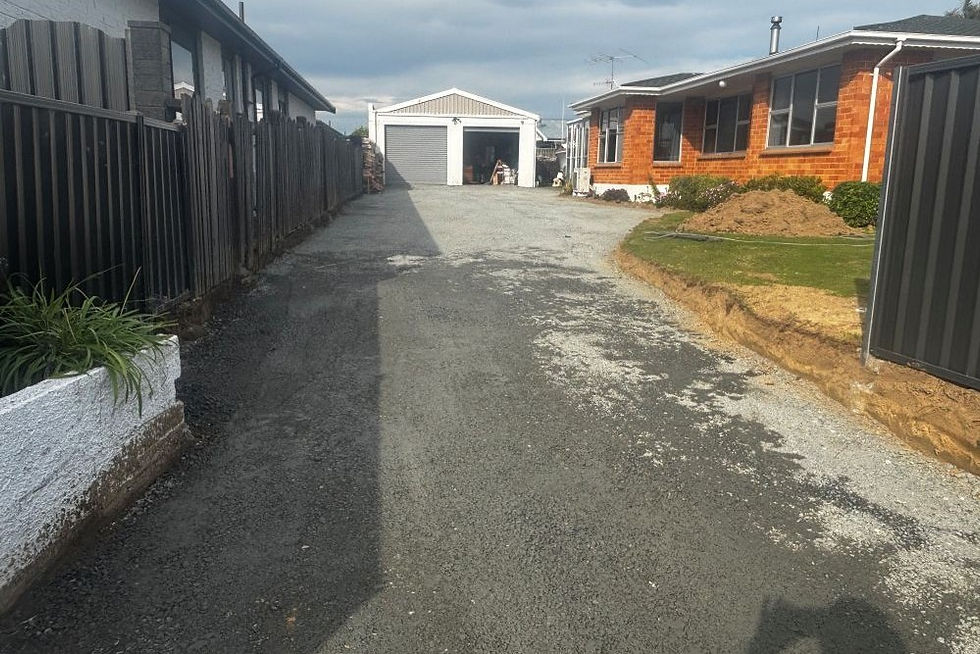
Once the ground is ready, we shape and level the area to suit the project. We then build up the base in suitable layers, making sure each layer is spread evenly and compacted properly before moving on to the next stage.
The exact approach depends on the site, ground conditions, drainage, access, and what the area will be used for. Taking the time to prepare the ground properly helps create a stronger and more reliable foundation for the finished project.
At Digger Worx Invercargill, we focus on getting the groundwork right from the start, rather than simply covering up problems underneath the surface.
Signs Your Driveway Base Might Need Attention
If your driveway is showing signs of damage, the base could be the cause. Here are some common issues that point to base problems:
Cracks in the surface: These often start when the base shifts or settles unevenly.
Potholes or depressions: These form when the base erodes or compacts poorly.
Water pooling: Poor drainage in the base can cause water to sit on the surface.
Uneven or sinking areas: This means the base isn’t supporting the weight properly.
If you notice any of these, it’s a good idea to get a professional to inspect the base. Fixing the base early can prevent bigger repairs later.
How Proper Base Preparation Saves You Money
Investing in a good base might seem costly upfront, but it saves money over time. A strong base means fewer repairs, less resurfacing, and a longer-lasting driveway.
Here’s how it helps your budget:
Reduces cracking and potholes: Less need for patching or resurfacing.
Prevents water damage: Avoids costly drainage fixes.
Supports heavier loads: No need to rebuild if you get a bigger vehicle.
Increases property value: A well-built driveway adds to your home’s appeal.
At Digger Worx, we focus on quality base work to give you peace of mind. It’s the foundation of a driveway that stands the test of time.
What to Expect When Building or Repairing Your Driveway Base
If you’re planning a new driveway or repairs, here’s what the process usually looks like:
Site inspection: We check the soil and drainage conditions.
Excavation: Removing old material and shaping the area.
Subgrade preparation: Compacting the natural soil.
Laying sub-base: Spreading and compacting road base.
Adding base course: Applying crusher dust or similar material.
Final compaction: Ensuring a solid, even base.
Surface installation: Laying asphalt, concrete, or pavers.
Each step is important to build a driveway that lasts. Skipping or rushing the base work leads to problems later.
Why Local Expertise Matters for Your Driveway Base
Southland’s climate and soil types can be tricky. We get a lot of rain, frost, and shifting soils. That’s why local knowledge is key.
At Digger Worx Invercargill, we understand these conditions. We know which materials work best and how to prepare the base to handle our weather. This local expertise means your driveway will be strong and reliable.
Building a driveway is more than just laying down concrete or asphalt. The base underneath is what keeps it strong and safe for years. Taking the time to prepare a solid base with the right materials like crusher dust and road base makes all the difference.
If you’re thinking about a new driveway or repairs, focus on the base first. It’s the foundation that supports everything else. And if you need help, we’re here to provide expert advice and quality work you can trust.
Ready to get started on your driveway? Contact us at Digger Worx Invercargill to discuss your project and how we can help build a base that lasts.
FAQs
How deep should a driveway base be?
There is no single depth that suits every driveway. The required depth depends on the existing ground conditions, soil type, drainage, driveway surface, and the amount and type of traffic the driveway will carry.
What is the best base for a driveway?
The right base depends on the site rather than one material being suitable for every driveway. The ground needs to be assessed first, then the base can be designed and prepared to suit the soil, drainage, expected traffic, and finished surface.
Why is compaction important for a driveway base?
Compaction helps create a dense and stable foundation. If the base is not properly compacted, it can settle or shift under vehicle loads, potentially leading to ruts, depressions, cracks, and other driveway problems.
What happens if a driveway does not have a proper base?
A poorly prepared base can contribute to sinking, cracking, potholes, uneven areas, and drainage problems. In some cases, repairing the surface alone will not solve the underlying issue.
How do I know if my driveway base is failing?
Common warning signs include recurring cracks, potholes, sinking or uneven sections, tyre ruts, soft areas, and water pooling. These problems can indicate movement, poor compaction, drainage issues, or unstable ground underneath the driveway.


Comments